Pages


Sunday, August 18, 2013

WSRM---How to Calculate Energy Savings of Incandescent Lights Vs. LED ?


HERE IS LIGHT!HERE IS LIFE!

www.whitesunredmoon.com


WSRM---How to Calculate Energy Savings of Incandescent Lights Vs. LED ?
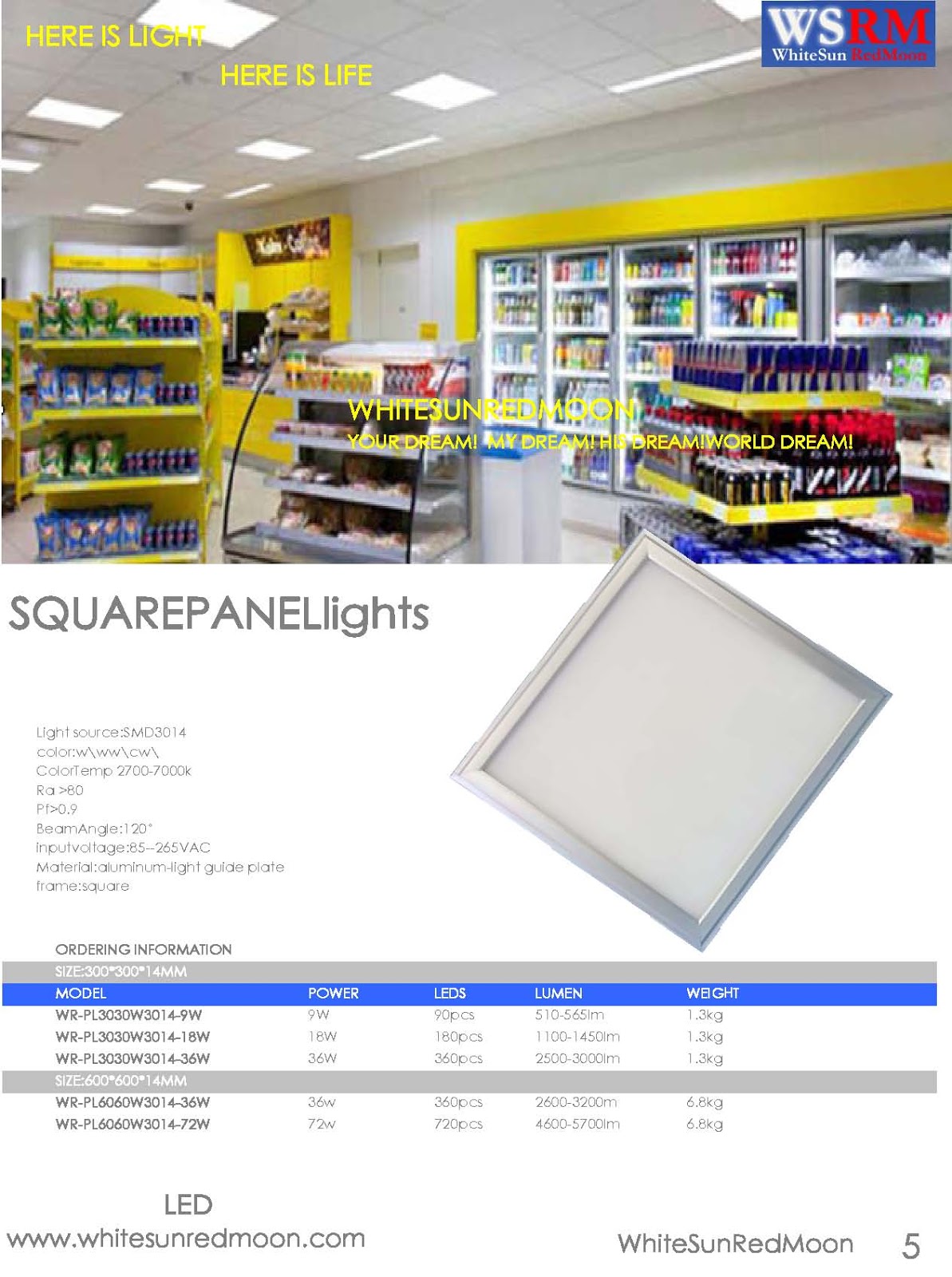
LED (light-emitting diode) lights can save you significant amounts of money, while helping to save the environment. LED lights offer a zero-maintenance lighting alternative that provides equivalent illumination to incandescent bulbs, with environmentally safe components, at a lower wattage. LED lights also emit considerably less heat than their incandescent counterparts and last longer, which saves replacement costs and inconvenience.
Friday, August 16, 2013

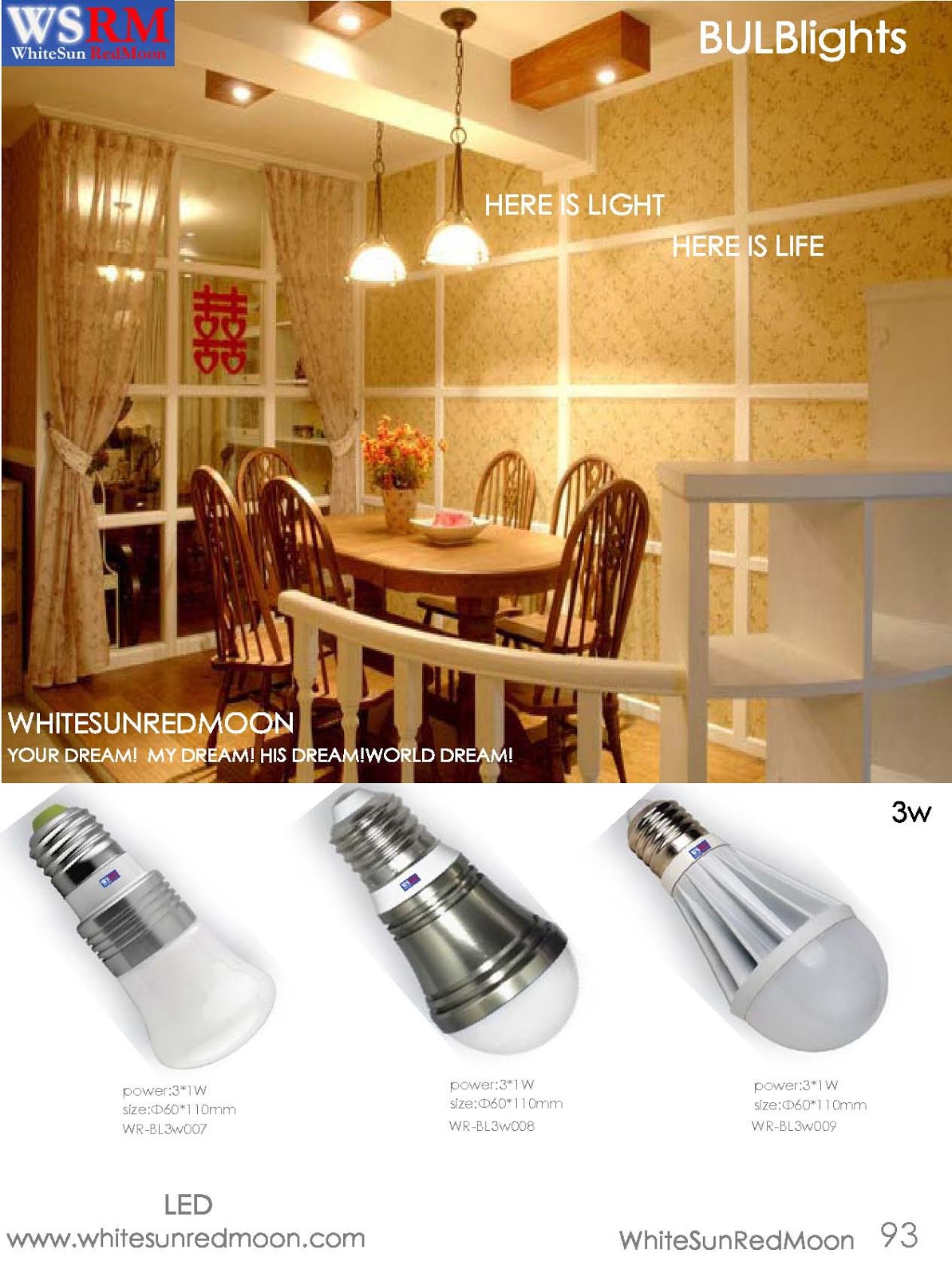
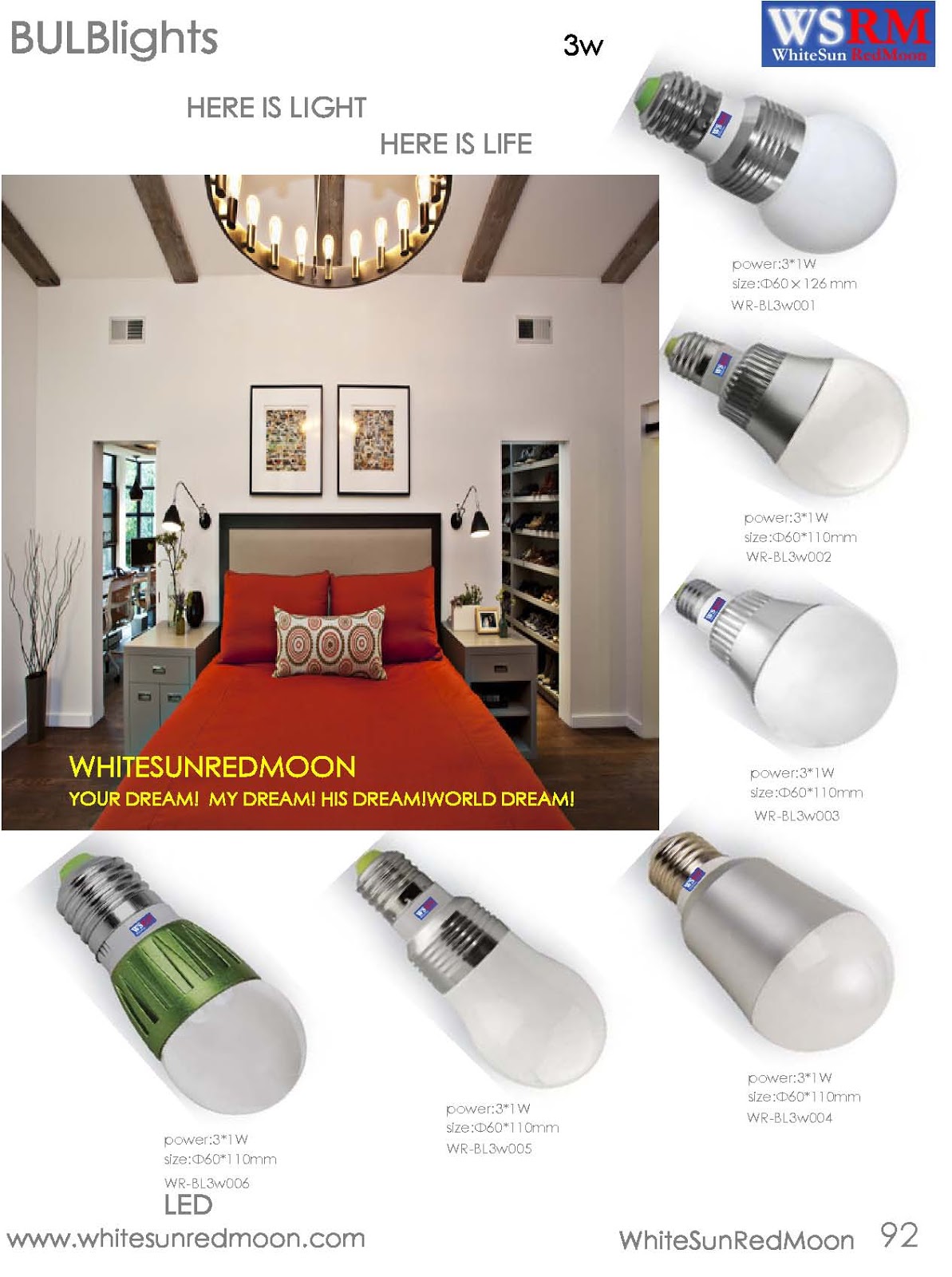
WSRM---LEDLights Bulbs Mature At Last!


HERE IS LIGHT!HERE IS LIFE!

www.whitesunredmoon.com


WSRM---LEDLights Bulbs Mature At Last!

About ten years ago I invested in an LED (light emitting diode) company, and [cutting to the chase] we were too early. The technology and the market did not come together as soon as we had expected, our first application win was short-lived, and the venture turned a lot of dollars into dimes. Along the way I heard the pitch about the promise of LEDs many times (usually when more money was needed), including the potential for LED bulbs to replace billions of incandescent (or “Edison”) bulbs sold each year.

Despite this painful experience, it hit me some time this year that LED light bulbs actually have arrived:
  • They’re available atHome Depot and my local hardware store (and many other places).
  • They look good — I’ve intermixed them with Edison bulbs in my house, and they are not easy to distinguish, except by the half-second lag between switch movement and the appearance of light.
The economics are now attractive.  
      A bit more on economics: an Edison bulb (and all other pre-20th century light sources) is essentially a heat source that produces a little bit of light. A “65 Watt” Edison bulb produces about 700 lumens (a lumen, “lm”, is a unit of visible light power). If you had perfect conversion of electricity into light, you would need only 1.0 Watt (“W”) of electrical power to produce 700 lm. So, an Edison bulb is 1.6% efficient. For such a widely deployed technology, this is amazingly bad. But Edison bulbs are much better than the kerosene lamps they replaced …

       A comparable LED bulb* consumes 13 W and produces 730 lm, which is 5.2x better efficiency than an Edison bulb, but still only 8%. The theoretical efficiency of an LED is about 30%, but commercially available LED materials are ~16%, and making a light bulb involves a power supply, phosphors, a protective container, etc., all of which dissipate energy.
   Why are LEDs better? Edison bulbs function by making a Tungsten filament very hot, and a hot object glows: radiating energy on a broad spectrum of wavelengths, only a small part of which is visible to the eye. The rest of the radiated energy is mostly heat.

    LEDs function by driving electrons across a junction between two semiconductor materials in which electrons move at different energy levels. When the electrons cross the junction, they drop from the higher energy level to the lower one, and the energy each electron loses when it drops takes the form of light to a large extent. The color of the light is mathematically determined by the energy level difference. So all of the light produced by an LED is the same color, and LEDs can be designed to produce light in the visible range. This precise conversion to one color is why LEDs are referred to as “digital light”. There is some waste heat caused by inefficiencies within the LED, however, the net result is a big gain in the percentage of electricity converted to visible light.

This digital precision creates a problem, too. Our eyes prefer full-spectrum analog light: what you get from a light bulb, a fireplace, or the sun. LED bulbs use a mix of phosphors (materials that absorb light and re-emit it at different colors) to convert the single color from the LED into multiple colors that mimic the spectrum, imperfectly. I find today’s LED bulb light pleasing, but my wife thinks the same light looks too orange.
LEDs are also long lived because they do not operate at the high temperatures that degrade the filaments of Edison bulbs. The LED itself has an expected life of about 50,000 hours (six years) of continuous use. Its power supply is less robust, so LED bulbs are usually rated for 25,000 hours. How long they last in practice is TBD, however: I have not used any for 25,000 hours. Edison bulbs are good for about 2,000 hours.
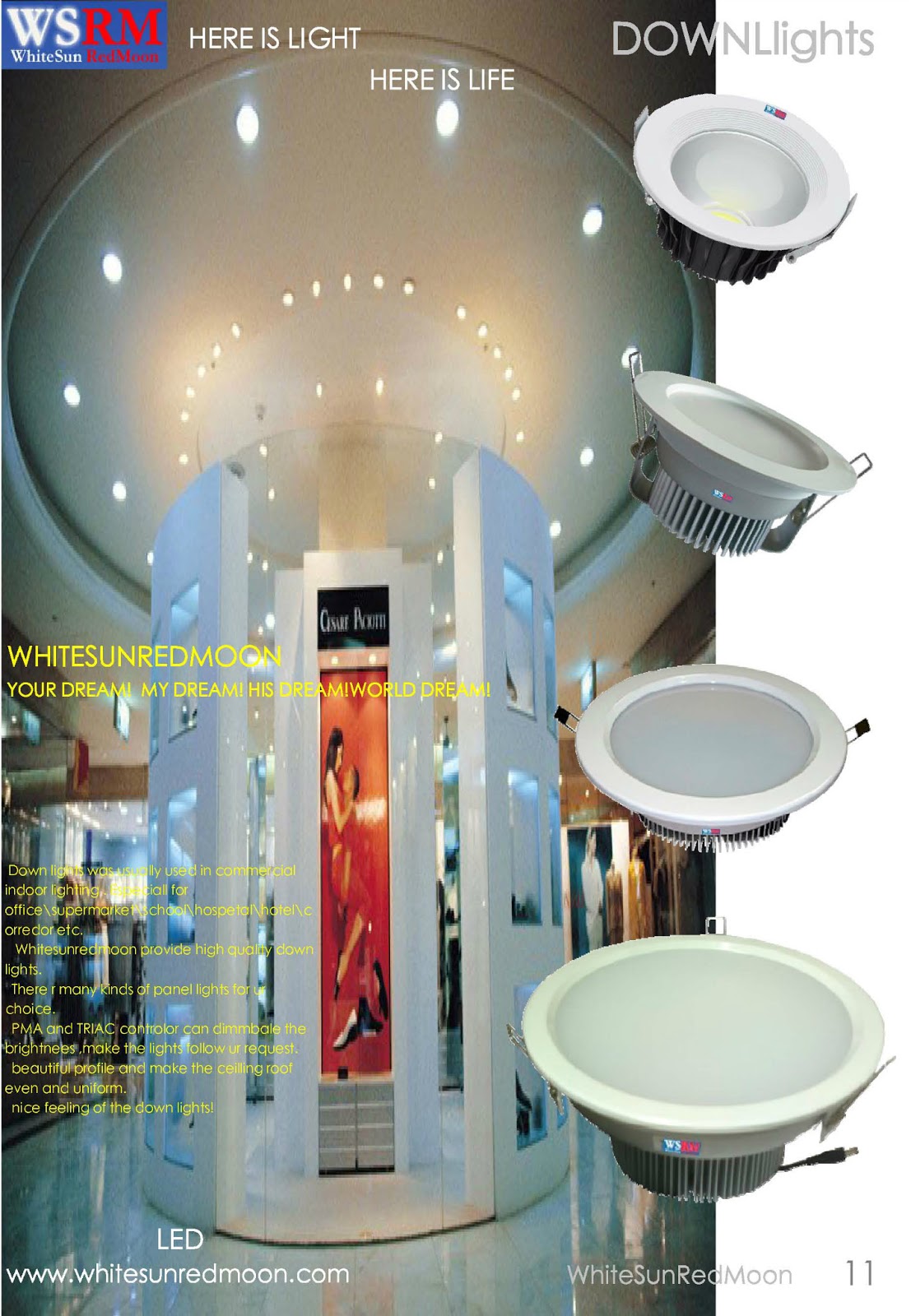
Here is how the dollars work out today. This example is for flood lights of the type used in down lights (“cans”), which is most of what we have in our house (pictured above). If you use a 65 W Edison bulb heavily (6 hours per day, 2,200 hours per year), it consumes $21.50/year of electricity (@ $0.15/kWh). The LED bulb uses 80% less electricity and lasts 11 years, so the electricity savings is $17.20 per year, plus a replacement Edison bulb @ $2, resulting in $19.50 of savings. The LED bulb costs $27 at Home Depot. So you get payback in 1.5 years and expect to keep saving for quite a few years beyond that. If the bulb is less used the payback is longer but the ROI is still good.
These savings will not change my lifestyle. But, a good ROI combined with less need to change bulbs and the satisfaction of being “greener” has caused me to stop buying Edison bulbs and install LEDs as bulbs burn out, focusing on the heavily used and hard-to-reach locations.
The easy thing to predict is what will happen, and the hard thing is when. We got the when wrong in 2003, but I have a deep love of innovation, and I’m pleased to see success come along in the end. The lesson here for investors is, when it takes this long and costs this much, the odds for start-ups are not good. The bulbs I am buying come from GE and Philips, WSRM,the three long time leaders in consumer lighting.


Thursday, July 11, 2013

WSRM---How to choose your TABLElights!


HERE IS LIGHT!HERE IS LIFE!

www.whitesunredmoon.com


WSRM---How to choose your TABLElights!

Before you buy a table lamp, consider this: a table lamp is the easiest and most flexible way to address your lighting needs and dress up a room all at once. It is one hard working accent you can add to any space, to complement any style.
As table lamps come in all variety of shapes and sizes, you can rest assured you will find one that fits your style and budget.And as with any of your other home furnishings, there are certain things that you should consider about a lamp before you buy one.

Size

Table lamps come in many different heights and widths. They can be anywhere from 25" to 32" tall. There is an even greater variety of width available, ranging from candlestick types to wider, more substantial ones.
To help you decide on the size of your lamp, consider where you plan to place it. For a narrow or delicate accent table, select a slender lamp. Not only will it be more attractive visually, but safer too, as a bulky lamp on a narrow or unsteady surface could topple over.
A table's height will also dictate your lamp's height. Shorter lamps on look better on higher tables, and taller ones on lower tables.

Style

There is an infinite variety of styles available. Choose a style that will complement your décor. Does your room have a modern feel to it? Buy a lamp that will be at home in that setting.
For a more traditional room a sleek, modern lamp might feel completely out of place. Look to something that is more traditional, like an urn shape. Try to align your lamp choice with your existing décor.

Shades

Most lamps come with detachable shades that you can easily change. The size of the shade depends on how large your lamp is, and where you are placing it.
Use a light colored shade such as white or off-white if you need more light from your lamp, such as for reading. A darker or opaque shade limits the light output and is good when you want a more subtle effect.

Light Bulbs

It is important to consider what kind of bulb a table lamp will take as bulbs for table lamps can range from 15 to 150 watts. You now also have the choice of using CFLs or LED bulbs along with incandescent ones. However, it is important to remember that you should never use higher wattage than specified on your lamp.
If you need the lamp for a decorative purpose only, a low wattage lamp could serve that purpose well. But if you are relying on your lamp to be an important source of light, consider getting one that accommodates three way lighting, where you can make your light brighter or dimmer as needed.

Monday, July 8, 2013

WSRM---How to care of ur LEDlights?


HERE IS LIGHT!HERE IS LIFE!

www.whitesunredmoon.com


WSRM---How to care of ur LEDlights?

When you’ve just upgraded your lights to LEDs, your first thought probably isn’t, “What am I going to do when these things burn out?” LEDs can last for as long as half a century, and when you pay for an entire LED lighting upgrade, you should expect them to. However, after you get over the dazzle and gleam of your favorite new lights, it’s important  to know how their lives will play out, so you can best care for them.
This blog post will answer two questions: How do you know when to replace your LEDs? and, How should you care for them so that won’t happen for a long, long time?
1. How to replace your LEDs

The trickiest part of LED maintenance is knowing when you need to exchange your old lights for new ones. Unlike other light sources, LEDs will never burn out. Instead, they get dimmer and dimmer until they’re no longer useful, which is usually when they emit about 70% of their original light output. So the question is, how will you know when it’s time to replace your LED?
When it reaches its rated life at 35,000, 50,000, 60,000 hours, there won’t be any definite indication that it’s time to change your light bulb. Plus, depending on how and where you use your LEDs, they could last shorter or longer than the projected rated life. When they do dwindle to 70%, you might not even notice.
Here are some suggestions so you’ll never find yourself sitting in the dark with the lights on:
  • The easiest solution might be to simply spot check the lights each year along with your routine cleaning and maintenance. Be sure to notice how the shadows and reflections have changed in the space over that time. Increase your attentiveness closer to their projected end.
  • You could also embed a controller in the light fixture to maintain a constant light output, underdriving the fixture for most of its  life until the end, when it goes into overdrive. When the lights finally fail, it will be more obvious.
  • You could also use an indicator or light sensor to monitor the consumed rated life, or the light level.
When you replace your LED fixtures, it will be easiest to change them out all at once, because as a general rule, LEDs will depreciate at the same rate when in the same environment.
2. How to maintain your LEDs

Of course, you want to prolong the day that you have to buy LED replacements as much as possible. In order to keep them going stronger for longer, you need to take special maintenance measures.

Wednesday, June 19, 2013

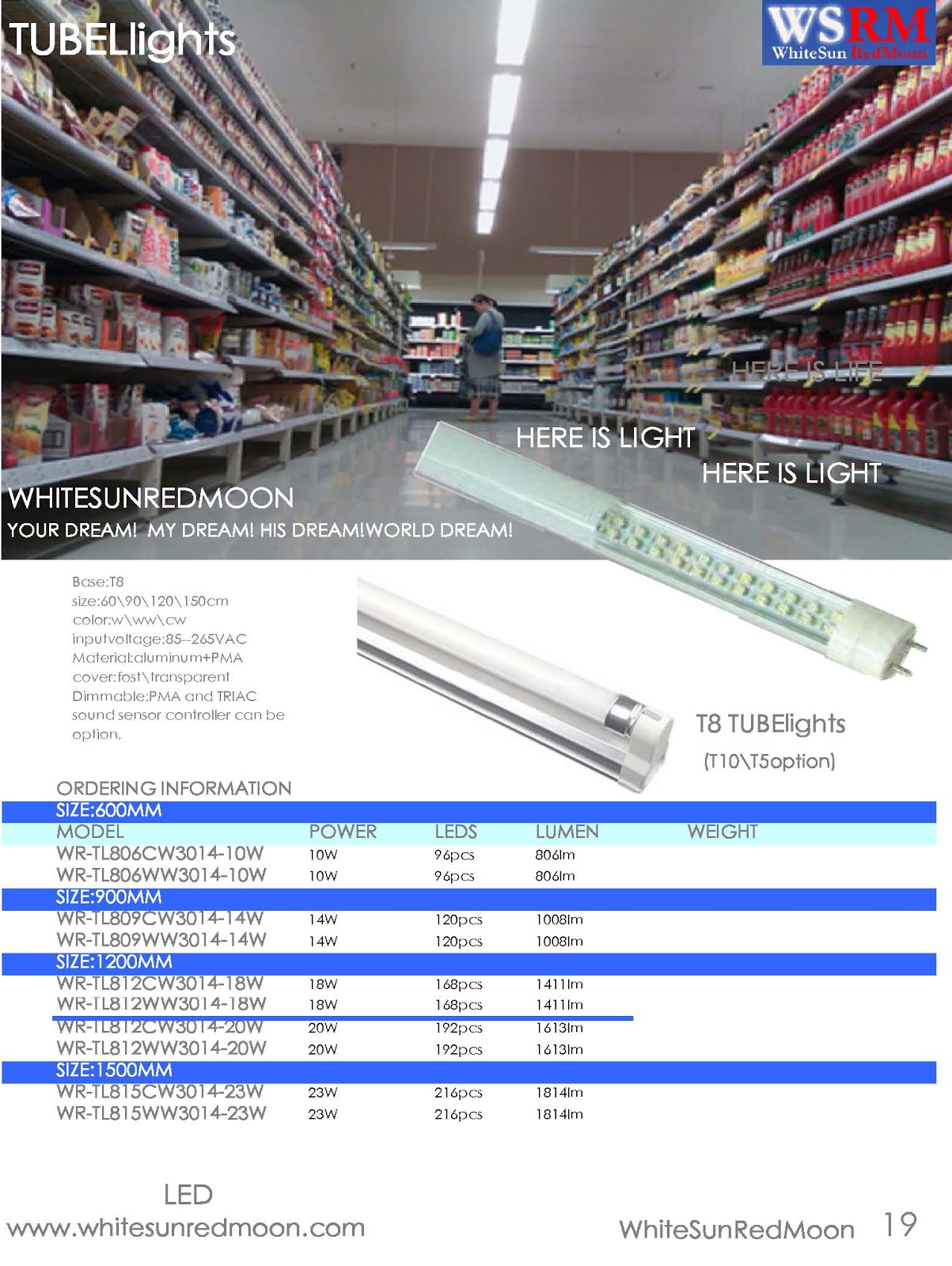
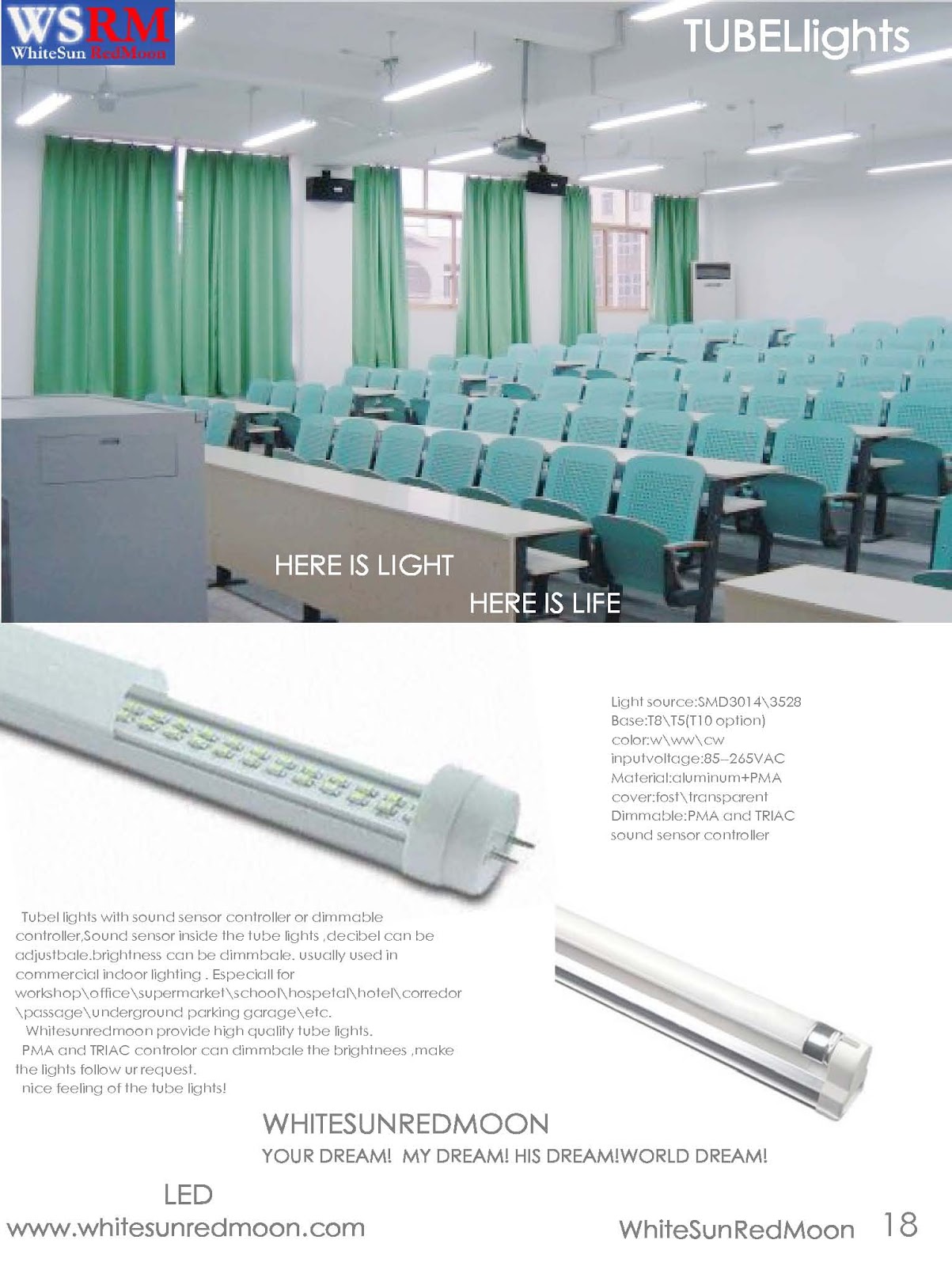
WSRM---LED TUBElights only $18 for 18W LED 4-foot T8 !---Worldwide LED Tube Light Shipments to Reach 220 Million in 2013 !


HERE IS LIGHT!HERE IS LIFE!

www.whitesunredmoon.com


WSRM---LED TUBElights only $18 for 18W LED  4-foot T8 !---Worldwide LED Tube Light Shipments to Reach 220 Million in 2013  !


DigiTimes Research said Wednesday that LED tube lighting shipments in 2013 would account for 5.5 percent of the entire lighting market globally.
With efficiency reaching 110lm/W, comparable to that of fluorescent bulbs – and with prices coming down – these ultra high efficiency replacements for fluorescent bulbs are becoming more popular.
The biggest drawback has been the difference in price between LED bulbs and CFLs or incandescent lighting. With increased efficiency and production, however, prices are coming down. DigiTimes said retail prices for 4-foot T8 LED tubes would drop by 25.7 percent in 2013 to an average selling price of $48.30.China company ,WSRM announced the price only  $18 for 18W LED  4-foot T8 LED tubes  ,It's very cheap price in the currently LEDlights market.
The DigiTimes forecast was bolstered by PR Newswire, Wednesday, quoting a GiiResearch.com ElectroniCast report that said global consumption of LED linear tube lamps rose to $194 million in 2012.
Last week ElectroniCast forecast that consumption would grow at an average annual rate of 23 percent between 2012 and 2017 and 34.2 percent from 2017 to 2022. This translates to nearly $2.37 billion in sales of LED tube lamps by 2022.
According to Stephen Montgomery, Principal Analyst at ElectroniCast, "Compared to incandescent lighting, LED-based solid-state lighting (SSL) delivers visible light with reduced heat. Moreover, its solid-state nature provides for greater resistance to shock, vibration, and wear, thereby significantly increasing its lifespan, which also translates to lower maintenance/labor expenses."
Companies affected by the DigiTimes and ElectroniCast news include Taiwan based, SemiLEDs Corp (NASDAQ: LEDS [FREE Stock Trend Analysis]) which engages in the development, manufacture, and sale of light emitting diode chips and LED components. SemiLEDs closed up 17.57 percent Tuesday on a DigiTimes report that Revenues for LED drivers were set to triple by 2015. In afternoon trading, Wednesday, shares were down $0.19 at $1.55.
Jim Cramer, according to Wall Street Cheat Sheet, rated Durham, North Carolina based Cree, Inc. (NASDAQ: CREE) a BUY Wednesday. The stock’s 52-week high was $61.72, and its 52-week low was $22.25. At mid-day Wednesday, Cree, Inc. shares were trading for $60.97, up $1.12 or nearly 2 percent on the day.

Also of note, Veeco Instruments, Inc. (NASDAQ: VECO) of Plainview, N.Y. Shares of Veeco opened at $40.07 Wednesday, went as high as $41.00 and was trading for $39.62, down $0.11 Wednesday afternoon.
German company, Aixtron SE (NASDAQ: AIXG) opened Wednesday at $16.50, hit $16.94 in morning trading and was going for $16.35 a share, down $0.54 on the day late Wednesday afternoon.
China company ,WSRM announced the price only  $18 for 18W LED  4-foot T8 LED tubes  ,It's very cheap price in the currently LEDlights market.