Pages


Saturday, May 4, 2013

WSRM---LEDlights do'nt contain even a little bit mercury but CFLs do it!


HERE IS LIGHT!HERE IS LIFE!

www.whitesunredmoon.com


WSRM---LEDlights do'nt contain even a little bit mercury but CFLs do it!


We won’t rest until we’ve explored every way LEDs and CFLs differ! This post is part of a series doing just that. So far we’ve covered everything from the basics, like rated-life and energy-efficiency to ore complex topics, like how each source performs in cold temperatures.you will read the series intrmoduction in the next period of time.
Mercury is a toxic substance that can attack the brains and nervous systems of humans. CFLs (and all fluorescent lights) contain small amounts of mercury, LEDs do not. In the long run, this makes the LED a much safer, low maintenance light source.
Why do CFLs contain mercury? 
The mercury, when excited by an electric current, helps the CFL generate light. This small amount of mercury, barely enough to cover the tip of a ballpoint pen, poses no threat to your health as long as it remains contained within the light bulb’s glass envelope. You only need to worry about it if the light bulb should break.
To safely deal with your CFLs, take them to an EPA approved recycling center. You can learn more about the importance of recycling CFLs in this blog post: Don’t Toss That CFL In The Trash.
What to do if your CFL breaks…
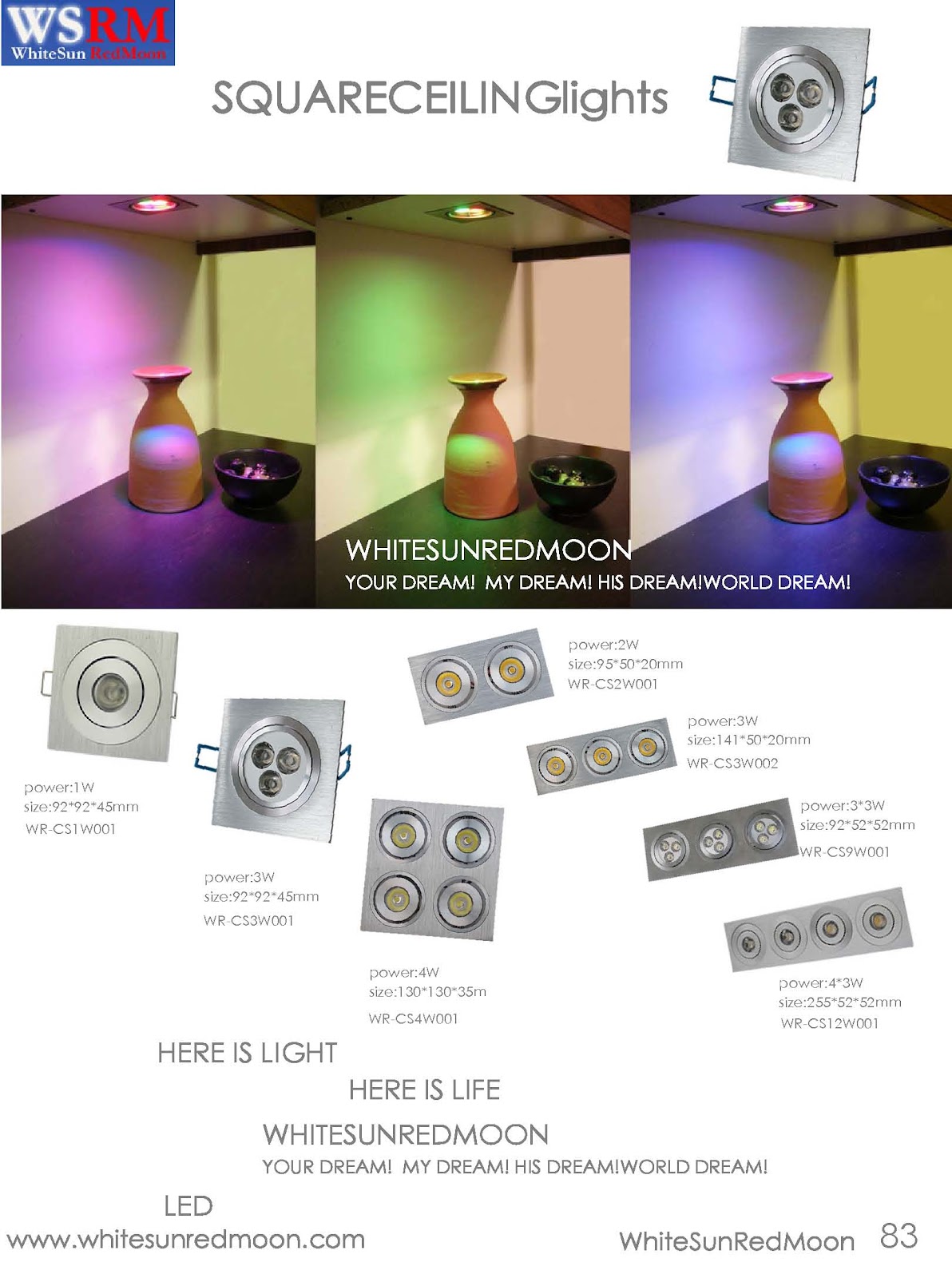
If you wind up with a broken CFL in your home, follow these steps for safe cleanup and disposal:
1. Put on gloves, a face mask, and protective clothing.
2. Gather the broken bits into a sealed container with a damp paper towel.
3. Turn off your central air and/or fans for 15 minutes.
4. Drop the container at a recycling center.
LEDs and Mercury…
You won’t find mercury in any LED light bulb or fixture. This is because LEDs generate light solely through the movement of electrons in a semiconductor material. No mercury is necessary! So, while CFLs are a completely viable and relatively safe light source, LEDs will let you rest a little easier.
Stay tuned for more information about CFLs and LEDs!

www.whitesunredmoon.com


Friday, May 3, 2013

WSRM---LEDlights has long life span than CFLs!


HERE IS LIGHT!HERE IS LIFE!

www.whitesunredmoon.com


WSRM---LEDlights has long life span than CFLs!

We won’t rest until we’ve explored every way LEDs and CFLs differ! This post is part of a series doing just that. So far we’ve covered everything from the basics, like rated-life and energy-efficiency to ore complex topics, like how each source performs in cold temperatures.you will read the series intrmoduction in the next period of time.

When deciding which light source to choose, one of the most important factors you should consider is how long the light will last.
A longer-lasting light bulb means you won’t have to spend as much money on replacement light bulbs, and you won’t have to waste time and energy on maintenance and upkeep.
In general, LEDs last about 10 times as long as CFLs. An LED’s rated life can vary between 25,000 and 60,000 hours. The rated life of most CFLs varies between 6,000 and 15,000 hours.

You should also consider that even after LEDs reach their forecasted rated life, they’ll continue to emit light, becoming progressively dimmer until after awhile, when they no longer emit enough light to be useful. If an LED ever appears to be burned out, it’s probably due to an electrical malfunction or some other component within the lighting system (like the LED driver).
On the other hand, CFLs will completely burn out at some point in time.
Stay tuned as we continue to explore the differences between LEDs and CFLs!

www.whitesunredmoon.com


WSRM---LEDlights love cold environments than CFLs!


HERE IS LIGHT!HERE IS LIFE!

www.whitesunredmoon.com

WSRM---LEDlights love cold environments than CFLs!


We won’t rest until we’ve explored every way LEDs and CFLs differ! This post is part of a series doing just that. So far we’ve covered everything from the basics, like rated-life and energy-efficiency to ore complex topics, like how each source performs in cold temperatures.you will read the series intrmoduction in the next period of time.

This post is part of a series written to help you understand the differences between the popular CFL (compact fluorescent lamp) and the newest kind of light bulb: the LED (light emitting diode). 
Depending on where you plan to use your light bulb, you may need to consider how it will react to the space’s temperature.
For a chilly area, like outdoors in a cool climate or inside a refrigerator/freezer, an LED will work best for you.
LEDs love cold environments. In fact, using them in places with cooler temperatures may even make them last longer – beyond their standard rated lives. 
CFLs, on the other hand, require a lot of heat to initially turn on. When you operate them in below-freezing temperatures, you’ll have a hard time even getting them to start up.
So why do LEDs thrive in cooler temperatures?
It’s simple. Excessive heat will cause the light emitting diodes within the fixture or light bulb to degrade at a faster rate. That’s why well-designed LEDs are equipped with “heat sinks” to adequately dissipate the heat created by the lights themselves. When LEDs are used in cooler environments, it’s easier for them to stay cold, preserving the diodes for a longer amount of time.
Stay tuned for more information about the differences between CFLs and LEDs!

www.whitesunredmoon.com


Thursday, May 2, 2013

WSRM---LEDlights is difference with CFLs in ON/OFF cycling!


HERE IS LIGHT!HERE IS LIFE!

www.whitesunredmoon.com


WSRM---LEDlights is difference with CFLs in ON/OFF cycling!

We won’t rest until we’ve explored every way LEDs and CFLs differ! This post is part of a series doing just that. So far we’ve covered everything from the basics, like rated-life and energy-efficiency to ore complex topics, like how each source performs in cold temperatures.you will read the series intrmoduction in the next period of time.

Here’s another post in our series about the differences between LEDs and CFLs. So far we’ve covered everything from efficiency to safety. 
Turns out, if you use CFLs and LEDs in the exact same way, they’ll react differently. Sometimes, the results can be damaging.
It’s a common myth that turning your fluorescent lights on and off frequently will increase your energy bill. While CFLs do use more energy to start up, it’s only equivalent to lighting the same lamp for a few extra seconds.
What you’ll need to watch out for is the price of replacing that CFL.
The rated life of a CFL, like all fluorescent lamps, can be dramatically reduced if the lamp is cycled on and off frequently.
The rated lives of LEDs, on the other hand, aren’t affected if you turn the lights on and off on a regular basis.  
What does this mean for you? Well, if you need lights in a place where they’ll cycle on and off a lot, you should consider using LEDs. Places like this might include the bathroom, your closets, the outdoors, and any lights on motion sensors or photocells.

www.whitesunredmoon.com


WSRM---LEDlights turns on constantly than CFLs!


HERE IS LIGHT!HERE IS LIFE!

www.whitesunredmoon.com


WSRM---LEDlights turns on constantly than CFLs!
We won’t rest until we’ve explored every way LEDs and CFLs differ! This post is part of a series doing just that. So far we’ve covered everything from the basics, like rated-life and energy-efficiency to ore complex topics, like how each source performs in cold temperatures.you will read the series intrmoduction in the next period of time.


LEDs and CFLs are both popular energy-saving light bulbs. But, we consider CFLs the light source of the present and LEDs the light source of the future. In fact, we’ve devoted an entire blog series to explaining that concept, comparing everything from rated-lives, to how each light holds up in cold weather…
They say the good things in life are worth waiting for. But, that’s not the case when it comes to your light bulbs’ start time. When you flip a light switch, you want immediate results. If you’ve been using incandescent lights all these years, you’re probably used to that luxury.
So, you might not expect a CFL  (a light bulb more technologically advanced than an incandescent) to take longer to reach its complete light output. CFLs, even the best CFLs, can take anywhere from 1 to 60 seconds to reach their full brightness.
Why do CFLs have this delayed start?
Well, an incandescent light bulb produces light when an electrical current flows through its filament. The filament heats up and glows. CFLs, on the other hand, use a more complex system to produce light. Cathodes within the lamp heat up to about 900 degrees Fahrenheit and pass electrodes from one end of the lamp to another. This excites the mercury vapor inside the lamp, creating UV light. The UV light must then pass through the white coating on the inside of the glass envelope to produce visible light.
So, what about LEDs? Do they have a delayed start?
Nope. LEDs, like incandescent lamps, turn on instantly. They produce light from the simple movement of electrons in a semiconductor material.
CFLs should reach their full brightness in plenty of time to provide you with the light you need, when you need it. But, when you’ve grown too accustomed to instant-start light bulbs, or the CFL’s short lag annoys you, this is just another reason to go LED.

www.whitesunredmoon.com


Wednesday, May 1, 2013

WSRM---LEDlights and CFLs dimmer!


www.whitesunredmoon.com


WSRM---LEDlights and CFLs dimmer!


We won’t rest until we’ve explored every way LEDs and CFLs differ! This post is part of a series doing just that. So far we’ve covered everything from the basics, like rated-life and energy-efficiency to more complex topics, like how each source performs in cold temperatures.you will read the series introduction  in the next period of time.
LEDs and CFLs. To the untrained eye, they might just seem like comparable alternatives to the incandescent light bulb. But when you dive a little deeper, you’ll find that they’re very different. 
Dimming. In a world where customization is king and energy-saving is of ever-increasing importance, dimming lets you have both. Putting your lights on dimmers saves electricity, using 10% less power when you dim the lights just 10%. (And more if you dim them lower.) Dimmers also let you tailor the lighting scheme to whatever you’re doing.
But, are LEDs and CFLs any good at dimming? Turns out there’s a bit of a discrepancy…
Here’s what we know:
It’s harder to dim LEDs and CFLs, because they don’t use the standard tungsten filament to generate light. But, every week more and more dimmable LED lights are introduced into the marketplace. In fact, a small number of LED lights are even beginning to mimic the way incadescents look when you dim them; they change color from white to yellowish-white to orangish-white to reddish-white.
CFLs, however, due to the very nature of their technology, are difficult to dim. They often need a special dimmer control and even then, the CFLs seem to blink and can suddenly turn off near the lower end of the dimmer range.
So, if dimming is important to you, LED light bulbs are your best energy-efficient choice.

www.whitesunredmoon.com